It helps close the readiness gap
A 2021 study published in Pediatrics found that children in the Imagination Library caught up with their more advantaged peers on kindergarten readiness within about two years of enrollment. The longer children were enrolled, the more likely they were to be ready for kindergarten. Researchers call this a dose–response relationship, and it's a strong sign that the program itself is making the difference.
A 2021 impact report from Case Western Reserve University in Cleveland found the gains were even larger in higher-poverty neighborhoods.
More reading at home, especially where books are scarce
In a 2021 survey of more than 3,000 enrolled families, parents across the board said they read with their children more often after joining. The biggest jump was in high-poverty households. For many families these books make up most of the home library: 64% said Imagination Library books were at least half the books in their home, and 19% said they were all or nearly all of them.
Measurable results in the classroom
A 2017 study in Syracuse, NY found that children enrolled in the Imagination Library were significantly more likely to be kindergarten-ready than similar children who weren't enrolled. The study controlled for race, gender, English-learner status, special-education status and free or reduced-price lunch eligibility.
Why one book a month makes a difference
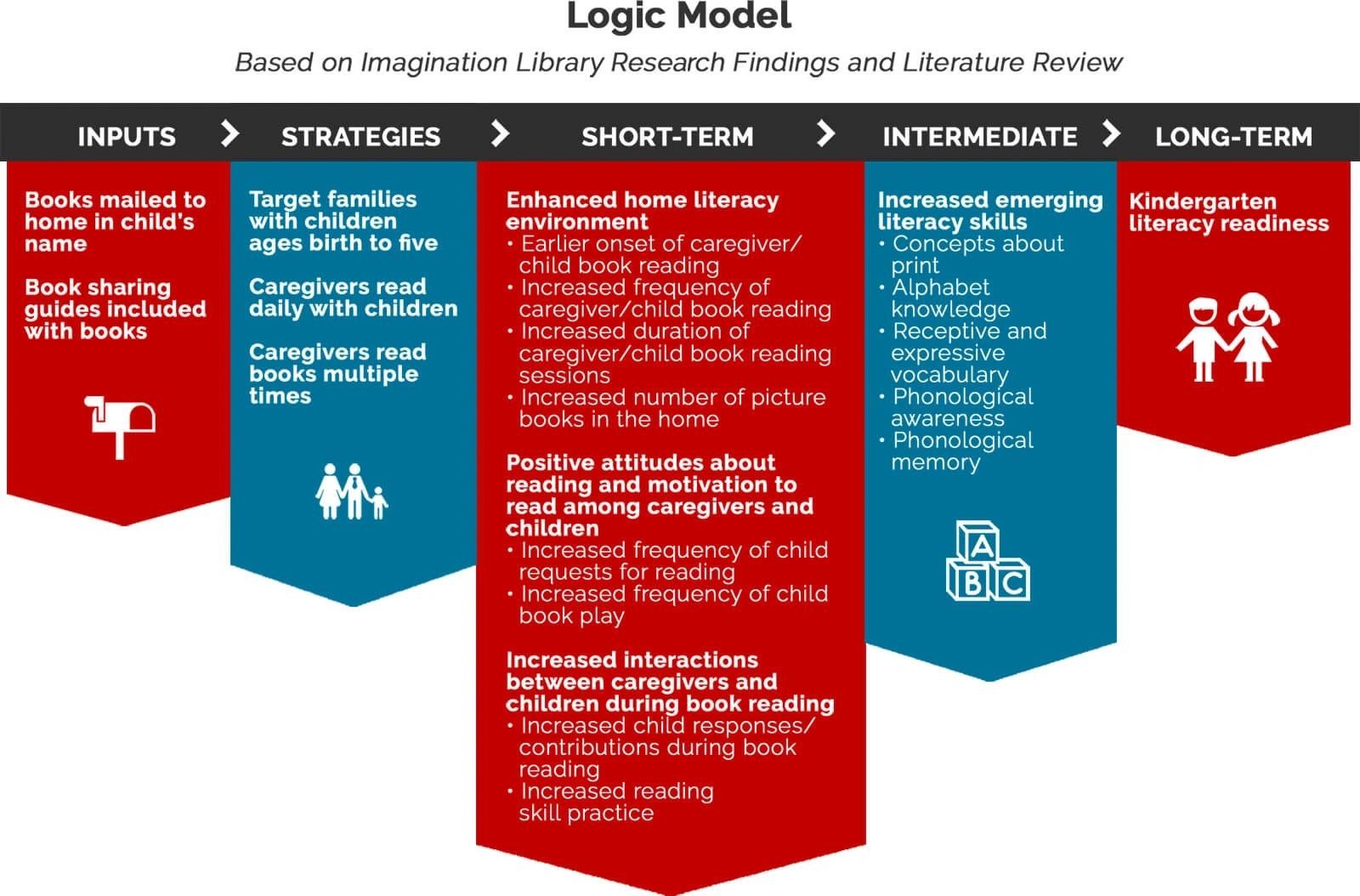
The Imagination Library's logic model shows how a steady stream of books changes routines at home: more books in the house, more reading together, and stronger early literacy skills.